
Civil Engineer
Engineering·Remote·Bangladesh, Bhutan +15·recently
Civil EngineeringInfrastructure Design+6
$100 / hr
Job category
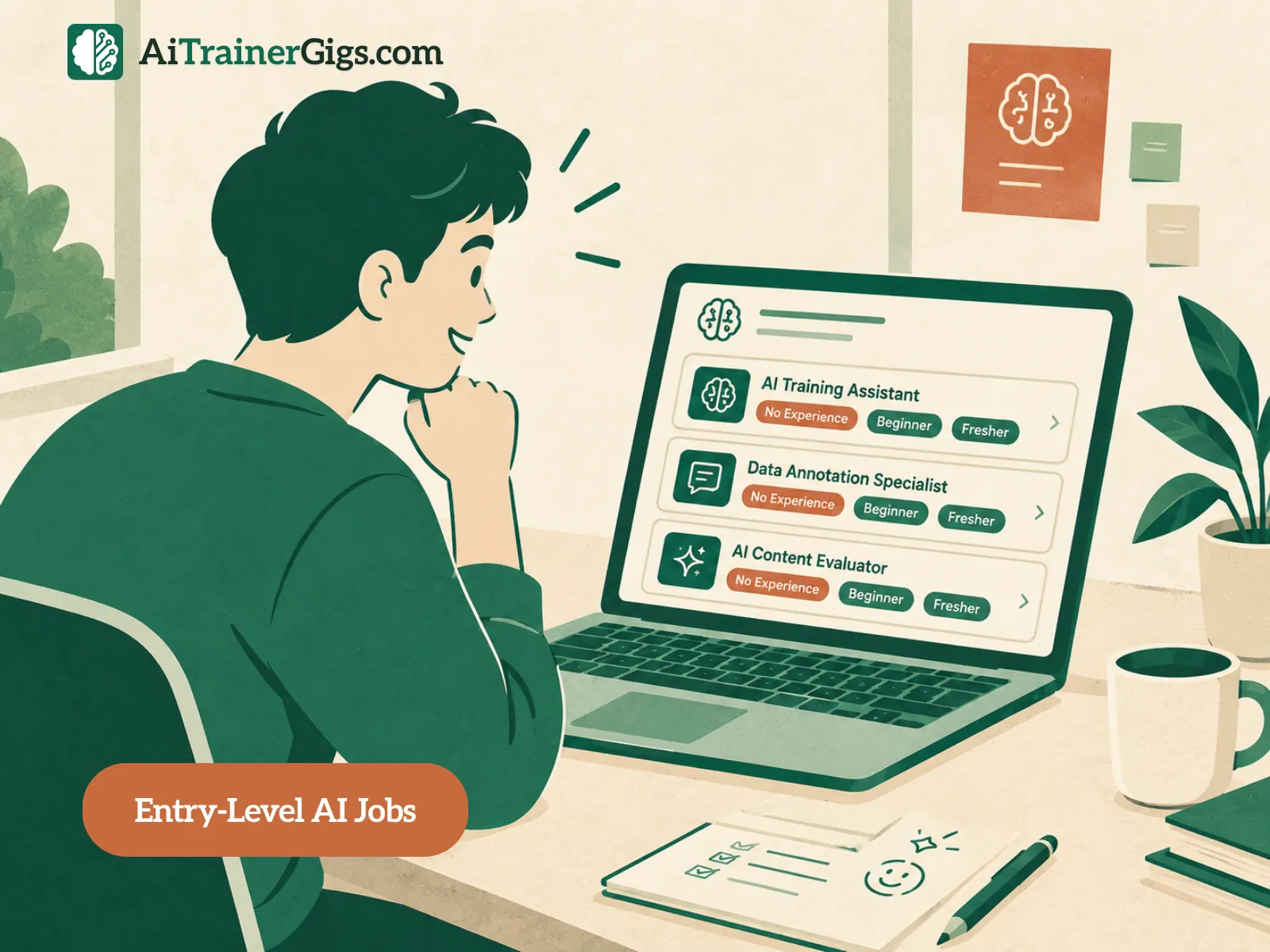
Entry-level AI jobs are the easiest way into the whole field. Most are remote, most hire with no experience, and most judge you on a short test rather than a CV. I pull the beginner-friendly roles from vetted platforms into one place and show you exactly how to land your first one.
Showing 1–8 of 8
Where to start
Four genuine no-experience on-ramps into AI work.
Not every AI job needs a background — these four are the ones people most often start with. Each hires with no experience, teaches you as you go, and leads somewhere better once you've built a track record.
Your first role
No CV required — but the test is real. Here's how to clear it.
Instead of a résumé, most platforms ask you to complete a short qualification task: you read the guidelines, do a sample of the real work, and pass if your accuracy is good enough. The single biggest mistake beginners make is skimming the guidelines — read them twice, follow them exactly, and you'll clear the bar most people trip on.
Then start narrow. Pick one platform, learn its rules properly, and protect your quality score, because that score is what unlocks the better-paid queues. One caution while you're new: a real job pays you and never asks you to pay first — skip anything wanting a fee, a course, or your bank details up front. For a full walkthrough, the start guide takes it step by step.
Money
An honest picture — a starting point, not a jackpot.
Set expectations honestly and you won't be disappointed. Beginner tasks typically pay somewhere around $3 to $12 an hour depending on the work and your region, and much of it is paid per item, so a fast, accurate worker earns more than the headline rate suggests. It's genuine income, but it's an entry point — nobody starts at the top.
What changes the number is what happens next. Once you've built a track record and a high quality score, you unlock better-paid queues and can move toward specialised work — a language, a subject, a technical skill — where rates climb steeply. Treat the first few weeks as paid training that also proves you're reliable.
Avoid these
Most first-timers fail for the same few reasons.
The commonest reason people don't pass isn't ability — it's skimming. Guidelines in this work are long and specific on purpose, and the qualification task checks whether you followed them exactly. Read them twice, keep them open while you work, and match their format precisely; that single habit clears the bar most applicants trip on.
After that, the usual traps are rushing (accuracy always beats speed early on), spreading across five platforms at once instead of learning one properly, and giving up after a slow first week. And the costliest mistake of all: paying for a “job”. No legitimate role asks for a fee, a course, or your bank details before real work exists — walk away from any that do.
Yes. Many AI training roles are built for beginners — platforms judge you on a short qualification test, not a résumé, so no experience is genuinely fine. You start with simple tasks and unlock better-paid work as your quality scores climb.
Data annotation, data labeling, chatbot training, and AI rating are the easiest ways in. They need attention to detail, careful reading, and clear writing rather than technical skills or a specific background.
No. Most beginner AI training work doesn't ask for a degree at all. What matters is following guidelines precisely and keeping your accuracy high. A second language or a niche skill helps you earn more, but neither is required to start.
Beginner tasks often pay around $3 to $12 an hour depending on the task and your region, with many roles paying per item. As you build a track record and take on specialised work, rates climb well beyond that. It's a starting point, not a ceiling.
Largely yes. A lot of remote AI training jobs with no experience are open in many countries, though some are region- or language-specific. Each listing shows where it's open, so you can filter to roles you're eligible for.
One rule filters out most scams: a real job pays you and never asks you to pay first. Avoid anything wanting a fee, a course, or your bank details before real work exists. Every platform we list is checked against real payout reports first.
Browse every verified AI gig on the live board, or read the beginner guide to get set up right.
